
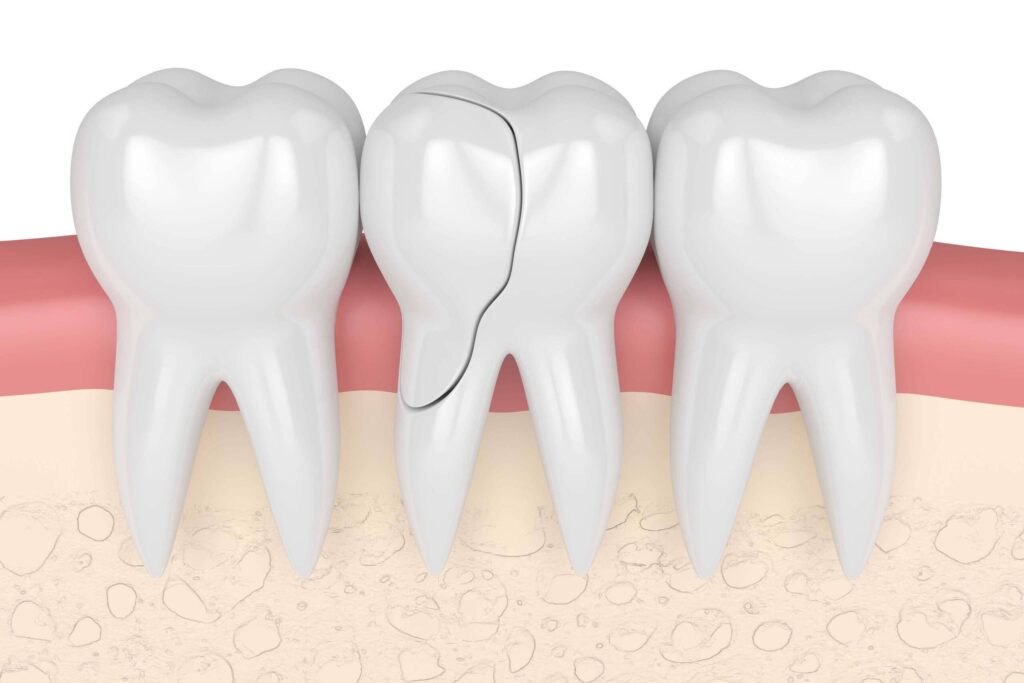
Cracked Teeth
That sudden, sharp pain when you bite into your food can be alarming. Sometimes it disappears as quickly as it came, leaving you wondering if you imagined it. This “phantom” pain is often the first sign of a cracked tooth—a common dental problem that can lead to serious complications if not addressed promptly.
A cracked tooth might seem like a small issue, but even a tiny fracture can create a pathway for bacteria to enter the inner pulp of the tooth, causing infection and pain. Understanding the signs and seeking timely treatment is crucial for saving the tooth and protecting your oral health.
Why Do Teeth Crack?
Teeth are incredibly strong, but they are not indestructible. Several factors can contribute to a tooth cracking, ranging from daily habits to unexpected accidents. Common causes include:
- Biting on Hard Objects: Chewing on ice, hard candy, popcorn kernels, or even non-food items like pens can place excessive stress on your teeth.
- Trauma or Injury: A blow to the mouth from a sports injury, a fall, or another accident can easily fracture a tooth.
- Teeth Grinding (Bruxism): The constant pressure from clenching or grinding your teeth, especially at night, can cause cracks to develop over time.
- Large Fillings: Teeth with large fillings are structurally weaker and more prone to cracking under pressure.
- Sudden Temperature Changes: Exposing your teeth to rapid temperature shifts, like drinking ice water after eating hot soup, can cause them to expand and contract, leading to tiny fractures.
Symptoms to Watch For
Cracked teeth don’t always cause constant pain, which is why they can be difficult to diagnose on your own. The symptoms often come and go. Be on the lookout for:
- Pain When Biting or Chewing: You may experience a sharp pain when you release your bite, as the crack flexes and irritates the tooth’s pulp.
- Sensitivity to Temperatures: A sudden sensitivity to hot, cold, or sweet foods and drinks can be a telltale sign.
- Inconsistent Pain: The discomfort may not be constant, making it hard to pinpoint which tooth is affected.
- Swelling of the Gum: You might notice swelling around the affected tooth, which could indicate an infection.
If you experience any of these symptoms, it is important to see your dentist as soon as possible. Ignoring a crack allows it to worsen, potentially leading to the loss of the tooth.
Treatment Options for a Cracked Tooth
The treatment for a cracked tooth depends on the size, location, and severity of the fracture. Your dentist will evaluate the damage and recommend the best course of action to restore the tooth’s function and prevent further problems.
- Dental Bonding: For very small, superficial cracks, your dentist may use composite resin (the same material used for tooth-coloured fillings) to fill the fracture and seal the tooth.
- Dental Crown/inlay: This is the most common treatment for a cracked tooth. A crown is a custom-made cap that fits over the entire tooth, holding it together, strengthening its structure, and protecting it from further damage.
- Root Canal Therapy: If the crack has extended into the pulp (the soft inner tissue of the tooth), a root canal may be necessary. This procedure removes the damaged pulp, cleans the inside of the tooth, and seals it to prevent infection. A crown is then placed over the tooth for protection.
Extraction: In severe cases where the crack extends below the gum line or splits the tooth, it may not be salvageable. In this situation, extracting the tooth may be the only option to prevent infection and pain. The missing tooth can then be replaced with a dental implant, bridge, or partial denture.
Preventing Cracked Teeth
While you can’t prevent every accident, you can take steps to reduce your risk of cracking a tooth:
- Avoid Chewing Hard Items: Be mindful of what you chew on, and avoid using your teeth to open packages.
- Wear a Mouth guard: If you play contact sports, always wear a custom-fitted mouth guard. If you grind your teeth at night, ask your dentist about a night guard to protect your teeth from pressure.
- Maintain Good Oral Hygiene: Regular brushing, flossing, and dental check-ups keep your teeth strong and healthy, making them less susceptible to cracks.
If you suspect you have a cracked tooth, don’t wait for the pain to become unbearable. Early intervention is key to saving your teeth and maintaining a healthy smile. Schedule an appointment with your dentist to get the care you need.