
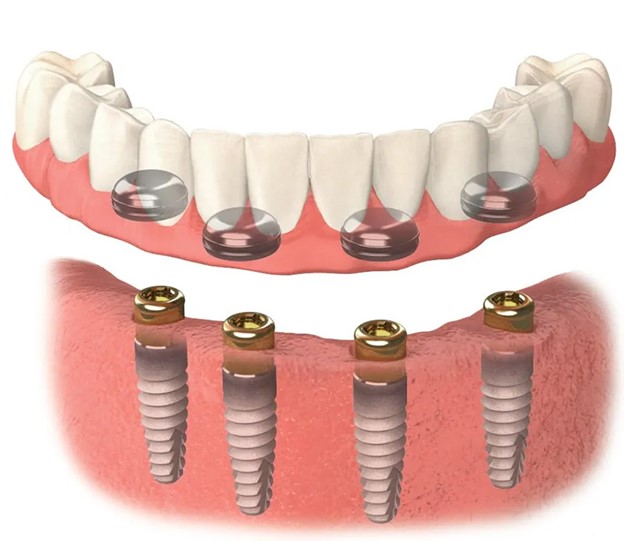
Implant-Retained Dentures
For decades, traditional dentures have been the go-to solution for replacing missing teeth. While they restore aesthetics, many patients find them lacking in stability. Slipping, clicking sounds, and difficulty chewing certain foods are common complaints that can make social situations stressful. If you are tired of loose dentures but aren’t looking for a full mouth of individual implants, there is a powerful middle ground: implant-retained dentures.
This innovative solution combines the broad coverage of a denture with the rock-solid stability of dental implants. It’s a modern approach that offers security, comfort, and a dramatic boost in confidence.
What Are Implant-Retained Dentures?
An implant-retained denture (often called a “snap-in” or “clip-on” denture) is a removable appliance that is supported by dental implants rather than resting solely on your gums.
Unlike a traditional denture, which relies on suction and adhesives to stay in place, an implant-retained denture snaps securely onto special attachments on implants that have been surgically placed in your jawbone. Typically, two to four implants are used per jaw to provide the necessary support. The result is a denture that stays firmly in place while you eat and speak, but can still be removed for cleaning.
The Difference: Traditional vs. Implant-Retained
The difference between these two options is often described as “night and day” by patients who have made the switch.
- Stability: Traditional dentures float on the gums. Implant-retained dentures are anchored to the bone. This eliminates the fear of your teeth slipping or falling out during a conversation or meal.
- Bone Health: When you lose teeth, the jawbone begins to shrink (resorb) from lack of stimulation. Traditional dentures can actually accelerate this bone loss due to pressure on the gums. Implants stimulate the jawbone just like natural tooth roots, helping to preserve your facial structure.
- Chewing Power: With traditional dentures, your bite force is significantly reduced, limiting your diet. Implant-retained dentures restore much of your natural biting power, allowing you to enjoy crunchy fruits, vegetables, and meats again.
- Comfort: By removing the friction and rubbing against the gums, implant-retained dentures significantly reduce the occurrence of sore spots.
The Process: A Journey to Stability
Getting implant-retained dentures is a multi-step process that requires patience, but the long-term results are worth the investment.
- Consultation and Planning: Your dentist will use X-rays or 3D scans to evaluate your bone density. If you have experienced significant bone loss, a bone graft might be necessary to ensure there is a solid foundation for the implants.
- Implant Placement: In a surgical procedure, titanium posts are placed into your jawbone. This is typically done under local anesthesia or sedation.
- Healing (Osseointegration): This is the most critical phase. Over a period of 3 to 6 months, the implants will fuse with your jawbone. During this time, you may wear a temporary denture so you are never without teeth.
- Attachment Placement: Once healing is complete, the implants are exposed, and special attachments (locators or bars) are fitted onto them.
- Fitting the Denture: Your custom denture is created with corresponding clips or snaps underneath. Your dentist will ensure the fit is perfect, and you will hear a satisfying “click” as your new smile locks into place.
Caring for Your New Smile
While these dentures are stable, they still require diligent care to ensure the longevity of the implants and the health of your gums.
- Daily Cleaning: Just like traditional dentures, you must remove your implant-retained denture daily to brush it and soak it.
- Gum and Implant Care: It is vital to brush around the implant attachments in your mouth. Plaque can build up around the metal posts, leading to gum inflammation (peri-implantitis), which can jeopardize the implants.
- Check the Attachments: The nylon clips or O-rings inside the denture that snap onto the implants will wear down over time. Visit your dentist regularly to have these parts checked and replaced as needed to maintain a tight fit.
- Don’t Sleep in Them: Give your gums a rest by removing your dentures at night.
Implant-retained dentures bridge the gap between conventional dentures and advanced implant surgery. They offer a secure, functional, and life-changing solution for those ready to say goodbye to denture adhesive and hello to a confident, worry-free smile.