
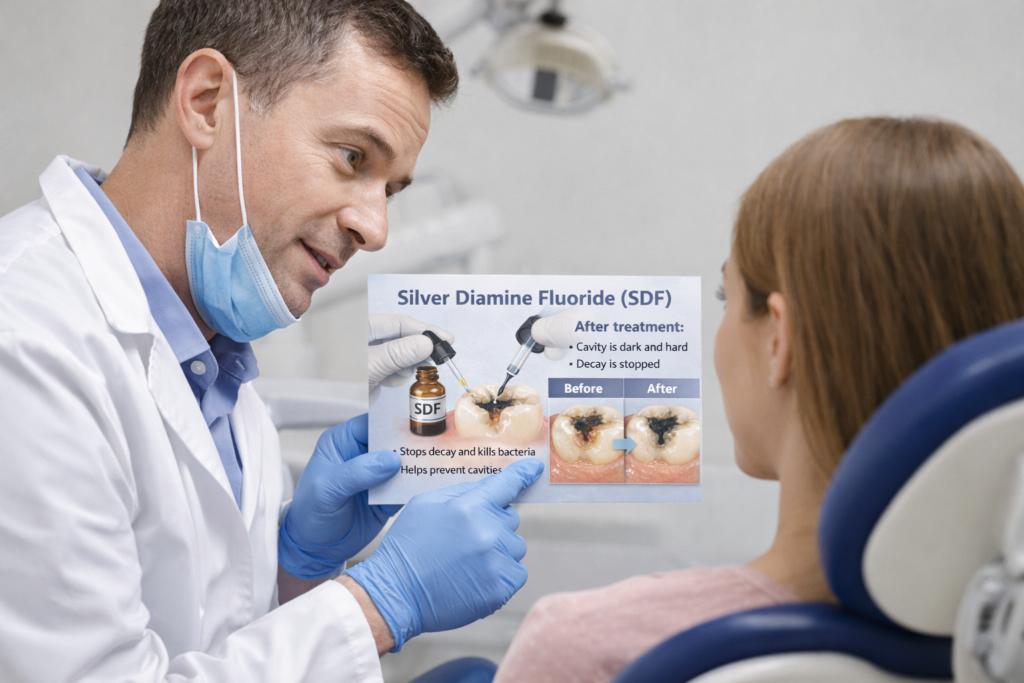
Silver Diamine Fluoride
For many patients, the sound of a dental drill is enough to trigger anxiety. The high-pitched whine and the vibration associated with filling a cavity can make dental visits stressful, especially for young children or those with dental phobias. But what if there was a way to stop tooth decay in its tracks without picking up a drill?
Silver Diamine Fluoride (SDF) is revolutionising the way dentists manage cavities. It offers a non-invasive, painless, and highly effective alternative to traditional drilling and filling. While it isn’t a replacement for all restorative dentistry, SDF provides a unique option for managing decay, particularly in specific situations where traditional methods might be difficult.
If you are looking for a gentler approach to oral healthcare, understanding how this antimicrobial liquid works could change your perspective on cavity treatment.
What is Silver Diamine Fluoride?
Silver Diamine Fluoride is an FDA-approved antibiotic liquid that is applied clinically to control active dental caries (cavities) and prevent further progression of the disease. While fluoride varnishes have been common in dentistry for decades, SDF is unique because of its specific combination of ingredients:
- Silver: Helps kill bacteria and prevents the formation of new biofilm.
- Fluoride: Promotes the remineralisation of the tooth structure, strengthening the enamel.
- Ammonia: Helps keep the solution concentrated and stable so it can be applied effectively.
When combined, these elements act as a powerful agent that halts the decay process almost immediately upon application.
How Does the Treatment Work?
One of the biggest advantages of SDF is the simplicity of the application. Unlike a traditional filling, which requires numbing shots (local anaesthesia) and the removal of tooth structure with a drill, SDF treatment is completely non-invasive.
The process is remarkably quick:
- Cleaning: The dentist cleans and dries the affected tooth to ensure the liquid can make direct contact with the decay.
- Application: Using a micro-brush, a small amount of the SDF liquid is painted directly onto the cavity.
- Curing: The liquid is allowed to air dry for a minute or two, often set with a special light to ensure it has soaked in.
That’s it. There is no noise, no needle, and no pain. The silver ions kill the bacteria causing the rot, while the fluoride hardens the remaining tooth structure to prevent the cavity from getting larger.
Who is the Ideal Candidate for SDF?
While SDF is a fantastic tool, it is not always the first choice for every cavity. Because it does not “fill” the hole left by a cavity—it merely stops the decay from spreading—it is often used as an interim solution or for specific patient groups.
Children
SDF is extremely popular in paediatric dentistry. Young children often struggle to sit still for the length of time required for a traditional filling. SDF allows dentists to stabilise the decay in baby teeth until the child is older and more cooperative, or until the tooth naturally falls out.
Patients with Special Needs
For patients with physical or cognitive disabilities that make sitting in a dental chair difficult, SDF offers a way to manage oral health without the trauma of invasive procedures or the need for sedation.
The Elderly
SDF is frequently used in geriatric care. As gum lines recede with age, root decay becomes common. SDF can treat these difficult-to-reach areas effectively, especially for patients in nursing homes who may have limited mobility.
The Side Effects: What You Need to Know
Silver Diamine Fluoride is safe and effective, but it comes with one significant side effect that patients must be aware of: discolouration.
When the silver in the solution reacts with the tooth decay, it turns the decayed area permanently black. It does not stain healthy enamel, but the spot where the cavity was will darken significantly.
For back teeth (molars), this aesthetic change is rarely an issue. However, for cavities on visible front teeth, this black staining can be a cosmetic concern. In these cases, dentists may recommend covering the stained area with a glass monomer cement or a filling later on to mask the colour.
Additionally, patients with a silver allergy should not undergo this treatment. Some patients also report a temporary metallic taste in the mouth immediately following the procedure, which dissipates quickly.
Comparing SDF to Traditional Fillings
It is important to view SDF as a management tool rather than a complete restoration.
- Traditional Fillings: These restore the shape and function of the tooth. The decay is removed, and the hole is plugged with composite resin or amalgam. It fixes the aesthetic and the structure.
- SDF: This stops the disease. It hardens the soft, decayed dentine but leaves the crater or hole behind. Food can still get stuck in the cavity, so maintaining good oral hygiene is essential after treatment.
A New Era of Minimally Invasive Dentistry
The introduction of Silver Diamine Fluoride into mainstream dental care represents a shift toward less invasive, more patient-friendly treatments. It allows dental professionals to prioritize the comfort of the patient while effectively managing disease.
For parents worried about their child’s first filling, or adults seeking a reprieve from the drill, this liquid application offers peace of mind. It acts as a pause button on decay, buying time and saving tooth structure without the trauma associated with conventional methods.
If you believe you or a family member could benefit from this treatment, the next step is a professional consultation. Your dental team can assess the severity of the decay and determine if this silver-bullet solution is the right fit for your smile.