

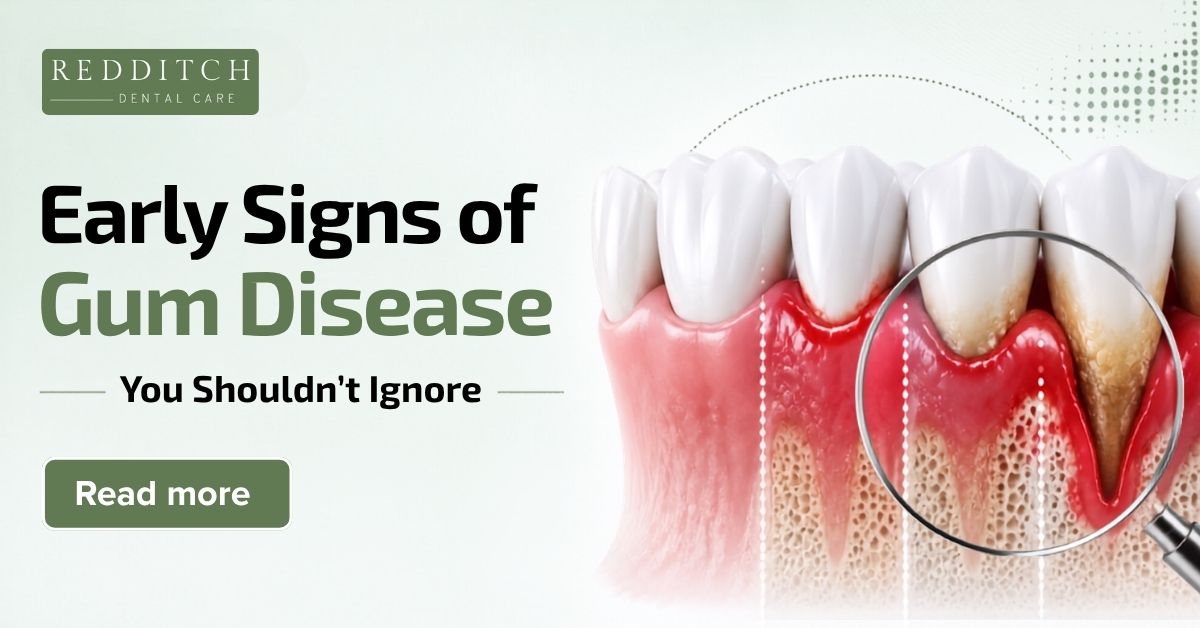
Healthy Gums provide the foundation for a strong and long-lasting smile. Many people brush their teeth twice a day to prevent cavities, but they completely overlook their gum health until a serious problem arises. Gum disease is incredibly common, yet it is also highly preventable if you catch it early.
When left untreated, early gum issues can develop into severe conditions that threaten both your teeth and your overall health. Recognizing the early symptoms allows you to take fast action and reverse the damage before it becomes permanent.
This guide will walk you through the most common early signs of gum disease, the risks of ignoring these warnings, and how the team at Redditch Dental Care can help you maintain excellent oral health.
What Exactly Is Gum Disease?
Gum disease, medically known as periodontal disease, is an infection of the tissues that hold your teeth in place. It typically starts when plaque—a sticky film of bacteria—builds up on your teeth and hardens into tartar.
Gingivitis is the first and mildest stage of gum disease. At this point, the condition is entirely reversible with good oral hygiene and professional Dental cleanings. However, if you ignore gingivitis, it can advance into periodontitis. This severe form of gum disease pulls the gums away from the teeth, creates infected pockets, and eventually breaks down the bone supporting your teeth.
Understanding the difference between a healthy mouth and a mouth in the early stages of gingivitis is your best defense against tooth loss.
Early Signs of Gum Disease You Shouldn’t Ignore
Your body will usually send you clear signals when your gums are struggling. Paying attention to these subtle changes can save you from pain, complex dental procedures, and expensive treatments down the road.
Bleeding When You Brush or Floss
Healthy gums do not bleed. If you notice a pink tinge in the sink after you brush or floss, you are likely looking at the first sign of gingivitis. Many people mistakenly believe they simply brushed too hard or used a rough flossing technique. While an aggressive brushing habit can cause irritation, consistent bleeding is almost always a sign of bacterial buildup and inflammation. You should never ignore bleeding gums or stop brushing the area; instead, you need to improve your oral care routine and consult a dentist.
Red, Swollen, or Tender Gums
Examine your gums carefully in the mirror. Healthy gums should look firm and pale pink. If your gums appear bright red, puffy, or feel tender to the touch, they are inflamed. This inflammation is your immune system reacting to the bacteria trapped along your gumline. Swollen gums can make eating certain foods uncomfortable and can make your daily oral hygiene routine feel like a chore.
Persistent Bad Breath
Everyone experiences morning breath or lingering odors after a meal heavy in garlic. However, if you have chronic bad breath that refuses to go away even after you brush and use mouthwash, gum disease might be the culprit. The bacteria that cause gum disease feed on food particles and produce foul-smelling toxins. This condition, known as halitosis, can be embarrassing and is a clear indicator that you need a professional dental cleaning.
Receding Gums and Tooth Sensitivity
Do your teeth suddenly look longer than they used to? This visual change happens when your gums begin to pull away from your teeth, a process known as gum recession. As the gums recede, they expose the sensitive roots of your teeth. Unlike the crowns of your teeth, the roots do not have a protective layer of hard enamel. This makes them highly sensitive to hot, cold, or sweet foods and drinks. If sipping a hot coffee or eating an ice cream suddenly causes a sharp pain, receding gums could be to blame.
The Hidden Risks of Ignoring Gum Disease
Brushing off the early signs of gum disease is a dangerous game. What starts as a minor annoyance can quickly escalate into a severe health issue that impacts far more than just your mouth.
Tooth Loss and Bone Damage
As periodontitis sets in, the infection travels deep below the gumline. The bacteria begin to destroy the jawbone and the connective tissues that keep your teeth firmly anchored. Over time, your teeth may become loose, shift out of position, or fall out entirely. Tooth loss heavily impacts your ability to chew, speak clearly, and smile with confidence. Replacing missing teeth requires extensive procedures like dental implants or dentures.
Connections to Overall Health
Your mouth is the gateway to the rest of your body. Extensive research shows a strong link between severe gum disease and systemic health issues. The bacteria from your infected gums can enter your bloodstream and travel to other organs.
Studies have connected untreated periodontal disease to an increased risk of heart disease, stroke, and respiratory infections. Furthermore, people with diabetes often find that severe gum disease makes it much harder to control their blood sugar levels. Protecting your gums is a vital step in protecting your overall well-being.
How to Prevent Gum Disease at Home
Taking control of your gum health starts in your own bathroom. A strong daily routine is your first line of defense against plaque and bacteria.
Master Your Daily Routine
Brush your teeth two times daily with a soft-bristled toothbrush and fluoride toothpaste, focusing carefully along the gumline. In addition, floss every day to remove plaque and food particles between your teeth. You must also floss at least once a day. A toothbrush simply cannot reach the tight spaces between your teeth where plaque loves to hide. If traditional string floss is difficult for you to use, try interdental brushes or a water flosser.
Watch Your Diet
Sugary and starchy foods provide a feast for the bacteria in your mouth. Limit your intake of sweets, sodas, and processed carbohydrates. Instead, eat a balanced diet rich in crunchy fruits and vegetables. Foods like apples and carrots naturally stimulate saliva production, which helps wash away food particles and neutralize harmful acids. Drink plenty of water throughout the day to keep your mouth hydrated and clean.
Why Regular Dental Check-Ups Matter
Even with perfect brushing and flossing habits, you cannot remove hardened tartar at home. You need professional tools and expertise to keep your mouth truly healthy.
At Redditch Dental Care, we focus heavily on preventative care to stop dental problems before they start. During a routine examination, our experienced team will carefully check your gums for any early signs of inflammation or recession. We use modern diagnostic tools to spot issues that are not visible to the naked eye.
Professional Hygiene Sessions
We highly recommend combining your routine check-up with a professional hygiene session. Our skilled hygienists will gently remove all plaque and tartar buildup from your teeth and along your gumline. They will also polish your teeth to remove surface stains, leaving your mouth feeling incredibly fresh and clean. If we spot the early signs of gingivitis, we will create a tailored treatment plan to restore your gum health quickly and comfortably.
With over 40 years of experience serving the Redditch and West Midlands community, our team is dedicated to providing high-quality, gentle dental care. We build lasting relationships with our patients and always prioritize your comfort and peace of mind.
Take Action for a Healthier Smile
Do not wait for your gums to hurt before you take action. If you notice bleeding, swelling, bad breath, or sensitivity, your body is telling you it needs help. Catching gum disease early is the easiest