

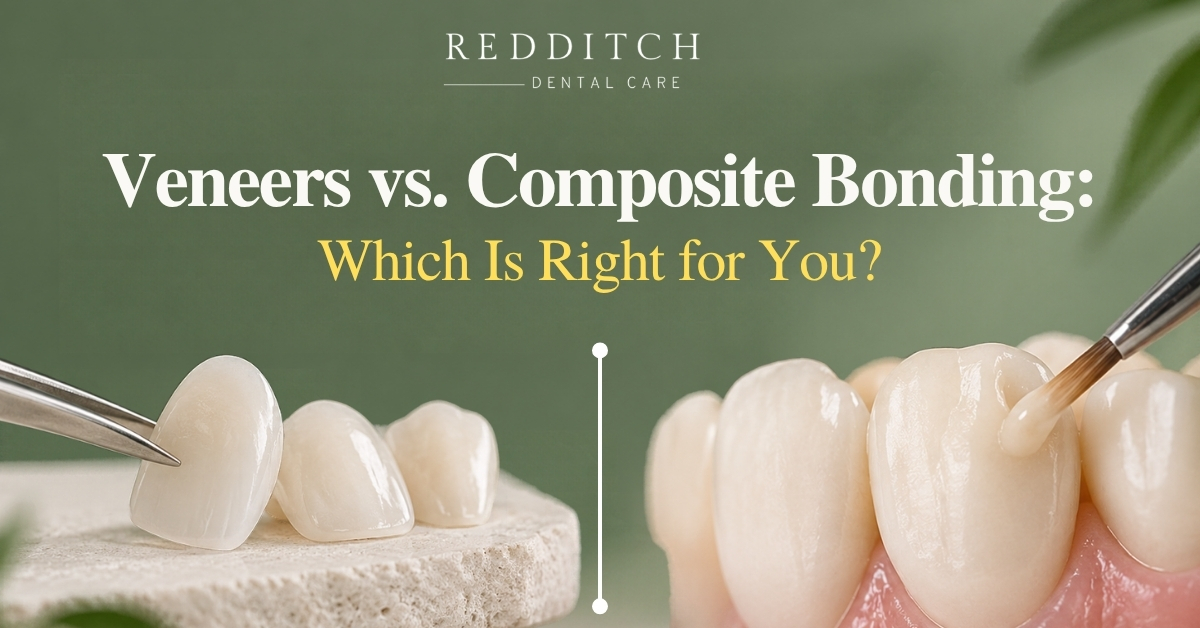
Thinking about brightening your smile but unsure which treatment to choose? You’re not alone. Two of the most popular options for improving the look of your teeth are veneers and composite bonding. Both can transform chipped, gapped, stained, or slightly wonky teeth, but they work in quite different ways.
In this guide, we’ll walk you through what each treatment involves, how they compare on appearance, durability, cost, and upkeep, and which might suit your needs. By the end, you’ll feel far more confident about your next step, whether that’s booking a consultation or simply asking better questions when you do.
What Are Dental Veneers?
Veneers are thin, custom-made shells that fit over the front surface of your teeth. Most veneers are made from porcelain, a strong ceramic that reflects light in a way similar to natural tooth enamel. There are also composite veneers, but when people say “veneers” they usually mean porcelain.
Because they’re made in a dental laboratory to match your smile, veneers can cover a range of concerns at once. They can hide stubborn discolouration, close small gaps, reshape uneven teeth, and give a uniform, polished finish.
Getting veneers usually takes more than one visit. Your dentist will typically remove a small amount of enamel to make room for the shell, take impressions, and fit temporary veneers while your permanent ones are crafted. Once ready, they’re carefully bonded into place.
What Is Composite Bonding?
Composite bonding uses a tooth-coloured resin, the same material often used for white fillings, to reshape and refine your teeth. Your dentist applies the resin directly to the tooth, sculpts it by hand, and then hardens it with a special light. A final polish blends everything in.
The big appeal here is speed and simplicity. Bonding can often be completed in a single appointment, and in many cases little or no enamel needs to be removed. That makes it a more conservative, reversible option.
Bonding is brilliant for smaller cosmetic touch-ups, such as:
Repairing a chipped or worn edge
Closing a small gap between teeth
Smoothing over minor discolouration
Reshaping a tooth that looks slightly out of line
The Main Differences at a Glance
Both treatments improve your smile, but they suit different situations. Here’s a quick comparison to help you see where each one shines.
Feature | Veneers | Composite Bonding |
Material | Usually porcelain | Tooth-coloured resin |
Treatment time | Usually two or more visits | Often one visit |
Tooth preparation | Some enamel usually removed | Minimal or none |
Typical lifespan | Longer-lasting | Shorter-lasting |
Cost | Generally higher | Generally lower |
Best for | Bigger, longer-term changes | Smaller repairs and quick fixes |
Next, let’s look at these differences in a little more detail.
Appearance: Which Looks More Natural?
Both options can look wonderfully natural in the right hands. Porcelain veneers have a slight edge when it comes to that light-reflecting, glass-like quality, and they resist staining very well. This makes them a popular choice for people who want a lasting, uniform “smile makeover“.
Composite bonding also looks great and can be shaded to match your teeth beautifully. However, resin can pick up stains over time from tea, coffee, red wine, and smoking, so the finish may dull slightly as the years pass.
Durability: How Long Will They Last?
Durability is where porcelain veneers tend to lead. With good care, they often last many years and stand up well to everyday wear. Because porcelain is hard-wearing, it holds its shine and shape over the long term.
Composite bonding is strong but not quite as tough. It’s more prone to chipping and staining, so it may need touching up or repolishing sooner. The upside? Repairs are usually quick and straightforward, since your dentist can simply add or reshape the resin.
Treatment Time and Comfort
If you’re after a fast result, composite bonding is hard to beat. Many patients walk out with a refreshed smile after a single appointment, and there’s rarely any need for injections when little or no enamel is removed.
Veneers take more planning. You’ll typically need at least two visits, plus time in between while your custom veneers are made. It’s a bigger commitment, but many people feel the polished, long-lasting result is well worth the wait.
Cost Considerations
It’s difficult to quote exact figures, because every smile is different and prices depend on how many teeth you’re treating and the complexity involved. As a general rule, though, composite bonding is usually the more affordable choice up front.
Veneers cost more initially, but they often last longer, which can make them good value over time. When you weigh up the cost, it helps to think about the whole picture: the price today, how long the result should last, and any future upkeep. Your dentist can talk you through the options during a consultation.
Maintenance and Aftercare
The good news is that caring for both treatments looks a lot like caring for your natural teeth.
Brush twice a day and clean between your teeth daily.
Keep up with regular check-ups and hygiene visits.
Go easy on very hard foods to protect edges from chips.
Cut back on staining habits, especially with composite bonding.
If you grind your teeth at night, mention it to your dentist. A protective night guard can help both veneers and bonding last longer.
Which Option Might Suit You?
Everyone’s smile and goals are different, but here are a few pointers to help you weigh things up.
Composite bonding may suit you if you:
Want a quicker, more budget-friendly treatment
Are fixing smaller issues like a chip or a small gap
Prefer to keep as much natural tooth as possible
Veneers may suit you if you:
Want a longer-lasting, high-shine result
Are making bigger changes to several teeth
Are keen on strong resistance to staining
Some people even combine both, using veneers on the most visible teeth and bonding elsewhere. A dentist can help you find the right balance.
The Bottom Line
Veneers and composite bonding are both excellent ways to feel happier about your smile. Bonding offers speed, affordability, and a gentle, reversible approach, while veneers deliver a durable, polished finish that’s built to last. Neither is “better” overall; the right choice simply depends on your teeth, your goals, and your budget.
The best next step is a friendly chat with a dental professional who can examine your teeth and give you tailored advice. If you’d like a personalised recommendation, get in touch with the team at Redditch Dental Care to book a consultation. We’ll help you understand your options clearly and choose the treatment that’s right for you.