

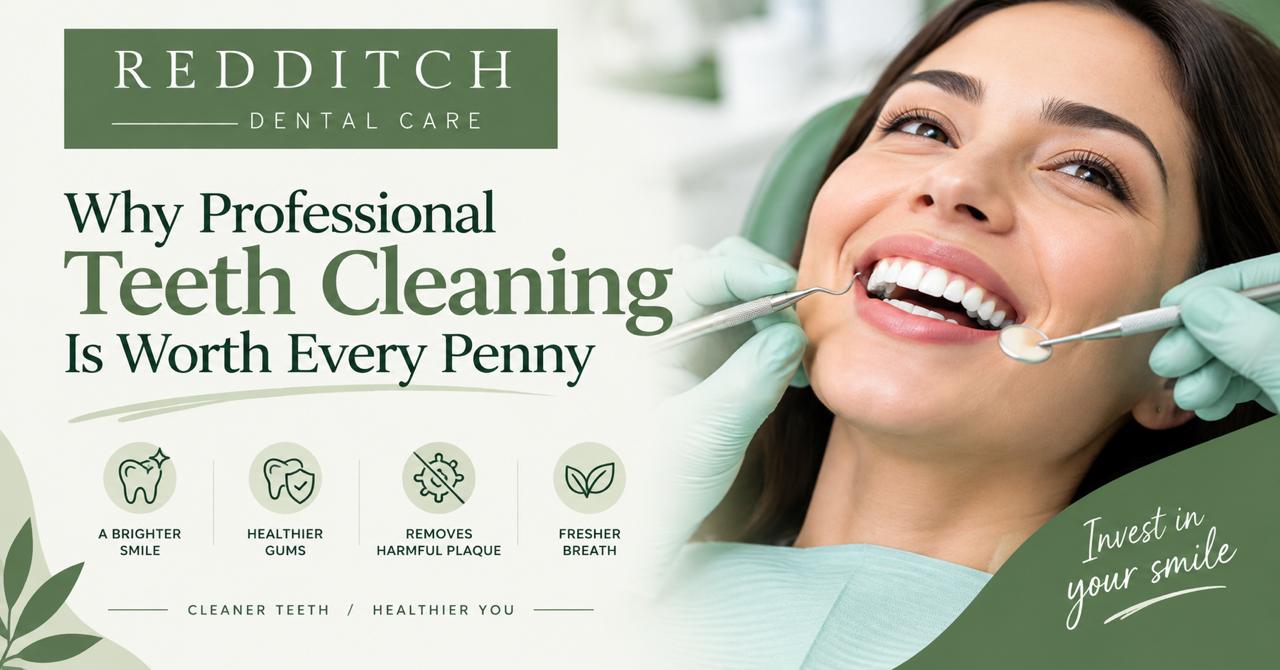
Professional teeth cleaning — carried out by a dental hygienist — removes built-up plaque and tartar that brushing at home simply can’t reach. Regular hygiene visits help prevent gum disease, tooth decay, and bad breath, and are recommended every six to twelve months for most adults.
You brush twice a day. You floss (sometimes). You rinse with mouthwash and avoid too much sugar. So why does the dentist still find something to clean at your hygiene visit?
The honest answer is that even the most diligent home routine has its limits. No matter how good your technique, a toothbrush can’t remove hardened calculus, and it can’t reach every surface between your teeth. That’s not a criticism — it’s just biology. And it’s exactly why professional teeth cleaning exists.
This post covers what actually happens during a hygiene visit, why it matters more than most people realise, and how often you should be booking one in.
What Happens During a Professional Teeth Cleaning Appointment?
A hygiene visit — previously referred to as a scale and polish — is a professional teeth cleaning treatment carried out by a dental hygienist or therapist. It typically lasts between 30 and 60 minutes and involves a few distinct stages.
First, the hygienist will assess the health of your gums, often checking for signs of inflammation, bleeding, or recession. Then comes the main event: PMPR or professional mechanical plaque removal (previously known as scaling). Using specialist instruments (either hand tools or an ultrasonic scaler), the hygienist removes calculus— also known as tartar — from the surfaces of your teeth and along the gum line. Calculus is hardened plaque that has mineralised over time. Once it forms, no amount of brushing will shift it.
After PMPR, the teeth are polished using a mildly abrasive paste. This removes surface stains and leaves the tooth surface smooth, which makes it slightly harder for plaque to reattach quickly.
Most appointments finish with personalised advice — your hygienist will show you where you’re missing spots at home and suggest improvements to your brushing or flossing technique.
Why Can’t You Just Brush More Carefully?
This is a fair question. The short answer: plaque hardens into calculus within 24 to 72 hours of forming, according to the British Dental Association. Once that happens, it can only be removed with professional equipment..
Calculus tends to build up most in hard-to-reach spots — behind the lower front teeth, around the back molars, and just below the gum line. These are also the areas most likely to harbour the bacteria responsible for gum disease. Left unchecked, that bacteria triggers inflammation in the gums (gingivitis), which, over time, can progress to periodontitis — a more serious condition that damages the bone and tissue supporting your teeth.
Gum disease is the leading cause of tooth loss in adults in the UK. The good news is that it’s largely preventable, and regular professional cleaning plays a significant role in that prevention.
What Are the Benefits of Regular Hygiene Visits?
The benefits go beyond just cleaner teeth. Here’s what consistent hygiene appointments actually do for your oral health:
Prevent gum disease. Removing calculus regularly disrupts the cycle of bacterial build-up that leads to gum inflammation. Patients who attend regular hygiene appointments are significantly less likely to develop advanced gum disease.
Reduce the risk of cavities. Calculus and plaque increase the acidity around your teeth, which erodes enamel and leads to decay. A professional clean lowers that bacterial load and gives your enamel a better chance.
Fresher breath. Bad breath (halitosis) is often caused by bacteria that live in plaque and calculus deposits. Removing them at the source makes a noticeable difference — far more than mints or mouthwash alone.
Earlier detection of problems. A hygiene visit gives a trained professional the chance to spot early signs of decay, gum recession, or other issues before they become costly or painful to treat.
A brighter smile. The polishing stage removes surface stains from tea, coffee, and red wine, leaving teeth looking cleaner and slightly brighter without any whitening treatment required.
How Often Should You Have a Professional Teeth Cleaning?
For most adults, every six months is the standard recommendation. However, some people benefit from more frequent visits — every three to four months — particularly those with a history of gum disease, people who smoke, those with diabetes (which can affect gum health), or patients with dental implants or orthodontic appliances.
Your dentist or hygienist will assess your individual needs and recommend an appropriate interval. The goal isn’t to over-treat — it’s to stay ahead of any build-up before it has a chance to cause damage.
Are Hygiene Visits Different From a Dental Check-Up?
Yes, and it’s worth understanding the distinction. A dental check-up is carried out by a dentist and focuses on diagnosing problems — examining teeth for decay, checking X-rays, screening for oral cancer, and assessing the overall health of your mouth. A hygiene visit is focused on cleaning and prevention.
The two appointments complement each other. Having one without the other leaves gaps. You might have a spotless bill of health from your dentist, but still have tartar accumulating below the gum line that needs professional attention.
Some practices offer combined appointments; others keep them separate. Either way, both are worth prioritising.
What to Expect If You Haven’t Been in a While
If it’s been a while since your last hygiene visit, the appointment might take a little longer than usual — there’s simply more to remove. Your gums may also feel more sensitive during and after the clean, and there can be some temporary tenderness over the following day or two. This is completely normal and settles quickly.
It’s also common for patients who’ve avoided hygiene appointments to feel anxious about what they’ll find. The good news is that the hygienist’s job isn’t to judge — it’s to help. Most people leave feeling relieved and genuinely surprised at how much better their mouth feels.
Getting Back on Track With Your Oral Health in Redditch
If you’ve let hygiene appointments slide, you’re not alone — and it’s never too late to get back on track. At Redditch Dental Care, the hygiene team offers professional teeth cleaning appointments in a calm, friendly environment. Whether you’re due a routine scale and polish or haven’t seen a hygienist in years, the team is here to help without any judgement.
Redditch Dental Care has been serving the local community for over 40 years, and patient wellbeing is at the heart of everything they do. As one long-standing patient put it: “The advice, care and attention of Redditch Dental Care far surpasses any expectation I ever had of dentists.”
Book your hygiene appointment online or call the practice on 01527 545361. Your gums will thank you.
Frequently Asked Questions About Professional Teeth Cleaning
Does professional teeth cleaning hurt?
For most people, a hygiene visit is comfortable. If you have sensitive teeth or significant calculus build-up, there may be some mild discomfort, but your hygienist will work at a pace that suits you and can use numbing gel if needed.
How long does a hygiene appointment take?
Most appointments last between 30 and 60 minutes, depending on how much cleaning is needed and whether a gum assessment is included.
Is professional teeth cleaning safe for people with sensitive gums?
Yes. Your hygienist will adapt their approach based on your gum sensitivity. In many cases, regular cleaning actually reduces sensitivity over time by removing the calculus that irritates gum tissue.
Does teeth cleaning whiten your teeth?
Professional cleaning removes surface stains and leaves teeth looking cleaner and brighter, but it isn’t the same as whitening treatment. If you’re looking for a more noticeable colour change, your dentist can discuss whitening options separately.
How much does a hygiene visit cost at Redditch Dental Care?
For up-to-date pricing, visit the Redditch Dental Care price list or contact the practice directly.
Can I claim hygiene visits on a dental plan?
Redditch Dental Care offers Denplan Essentials, which can cover routine appointments including hygiene visits. Speak to the team to find out what’s included in your plan.